
A working record
of your exposure.
From the first signed scope to a verified change. One place to see what was observed, what remains uncertain and what your team should do next.
Permission is
part of the system.
Define the targets, exclusions and authorization before an assessment begins. Adding an asset to inventory does not expand testing scope.
Start with the assets.
Add the context.
Import a CSV or add an asset. Associate services and responsible teams so a technical observation can be assessed in the right business context.

The surface changes.
Keep a record.
Daily checks observe approved external HTTP services. Compare observations over time and keep monitoring failures separate from reassuring results.

See the change.
Review changes to the observed surface alongside the evidence collected during the check.
See the gaps, too.
Unreachable services, failed checks and stale evidence remain visible. A missing observation does not mean an asset is safe.
A finding should lead
to a decision.
Review the evidence and its limits. Assign a fix or record an accepted risk. Request a retest when a confirmed issue has been addressed.
What was observed?
Inspect the finding, the affected asset and the supporting evidence.
What will your team do?
Record remediation ownership or an accepted risk. Keep the decision attached to the issue.
Did the fix hold?
Retest confirmed fixes and retain the verification result. A claim of completion is not proof of remediation.
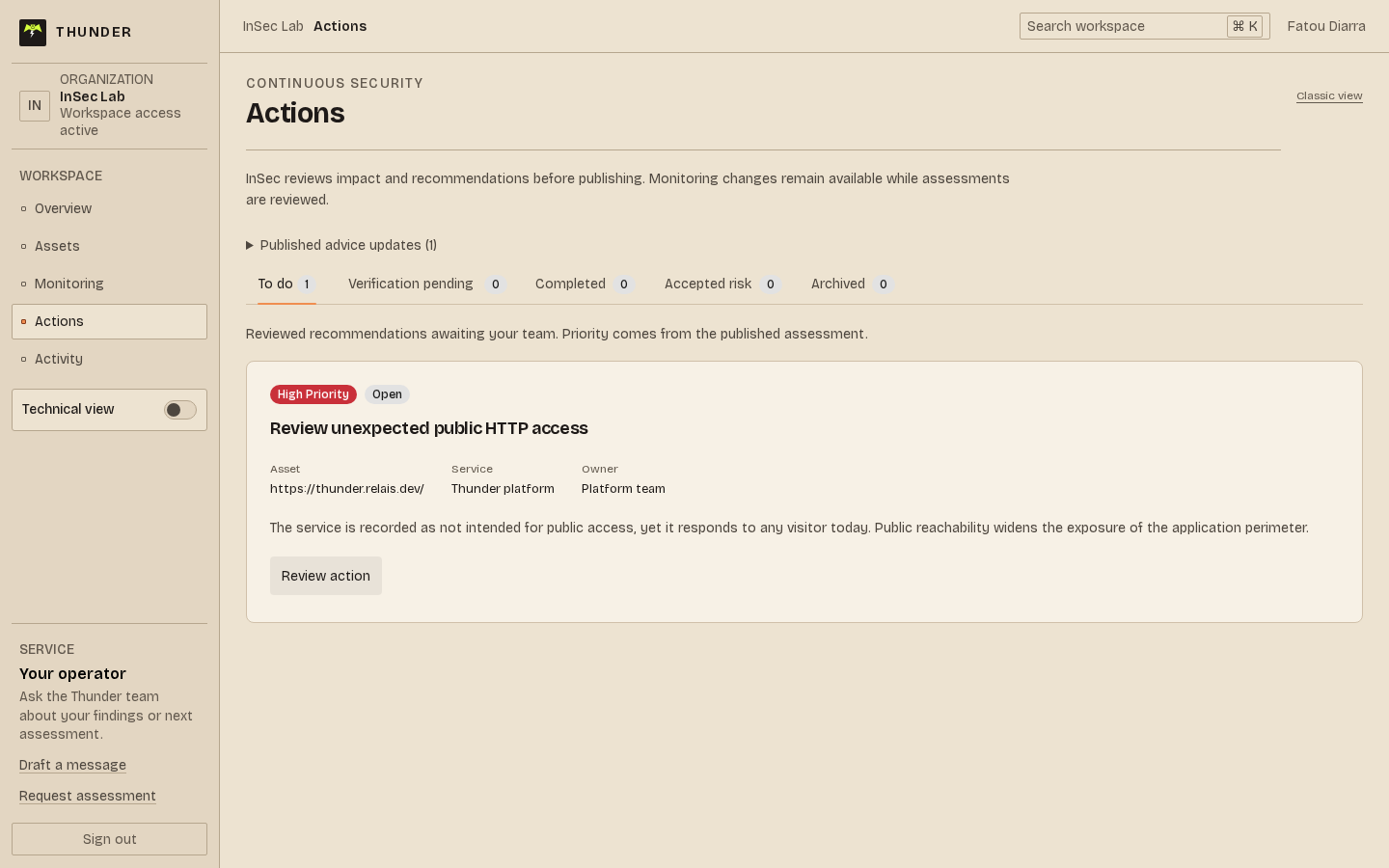
Clear next steps.
A shared view.
Assets, monitoring and actions form the client journey. Technical detail is available when it helps the investigation.

Put your scope in focus.
Talk to InSecTell us what you need to protect. Technical discussions start under NDA.